Showing posts with label essay. Show all posts

Sunday, March 08, 2015

This could be considered an essay

There are so many of them, going about the world in a blitheness of ignorance. Sure of their Science, of their crude modern iGods to protect them, secure in their belief that somehow technology will outpace the demons that race along beside it, behind it, within it. That every time we stall, some innovation will vault us into the future. They buy into the conspiracy of progress. They buy into the modern myths like global warming, women’s rights and vaccinations. They forget that eugenics was defended by most scientists in its day, that heroin was considered safe and had no side effects. They don’t understand that the world changes. That sometimes the things everyone believes to be true are the ones that are wrong.

If the lone voices are all silenced, then there will be no new lone voices. If there is no debate – not even a discussion – then terrible things will happen, and terrible things have happened. When everyone agrees on something, then no one is thinking. Consider it. We pretend that Time will bow to the whims of our technologies, of our watches and phones and that we can alter the rhythm of the world because puritans wanted more daylight. And they got it, because puritanism works so very well. Cut away everything that doesn’t matter, and you are left with ... essentials.

We save energy, cry the Scientists and Transport people (all in the pockets of Science, every one, oil and electricity both) that we save energy. People come home earlier, have more daylight at their disposal – as though people were plants – and this somehow prevents theft. And yet, and yet the day of it is nothing like that at all. Mad rushes, accidents that would not have happened otherwise. Deaths that could have been prevented if we had not decided we could meddle with Time as easily as we do with Truth!

Daylight savings time is not a thing. It is not even an invention. It is a track, and we must fight against puritan lies, against their desire to force people to waken before dawn. The conspiracy cannot be allowed to stand. Refuse to change your clocks. This day kills too many, and we cannot defeat Time. Join me, and fight the power!

Sunday, July 14, 2013

Thoughts on YA literature in the future

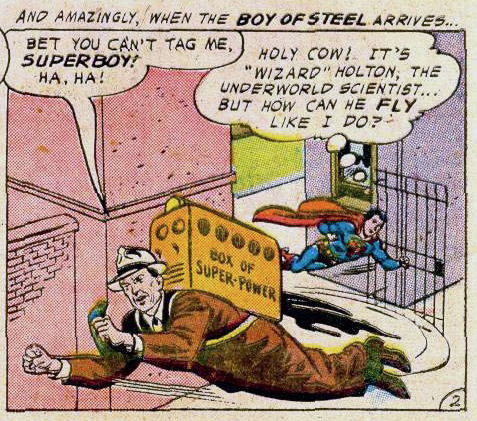
So. I showed this to a friend, who commented on how it hadn't aged well, which got me to thinking about comic books. These stories were, after all, written for kids. I can well picture writers going to their kids, "Well, what do you want superboy to do?" and then writing out the replies as stories. The intent was to entertain children in an age when children were the audience of comic books. Shocking, I know, but it did exist. Granted, I do wonder what the artists thought upon getting these scripts ....

All of which gets me wondering about children's fiction and how it shouldn't age well. The genre is written to entertain children and what children like alters from decade to decade, often depending on what adults believe the children want, marketing and so forth. I imagine most children's stories of this era that class as pop culture would fare as poorly in the future.

Monday, July 08, 2013

Character development in Tetris.

The development of the characters that are the core of the Tetris franchise are fraught with difficulty. All the characters, from rectagle to square to squiggly bits, have uses that vary depending on the terrain the game assigns them, much like how the battleground of a chess board limits the efficacy of the various pieces. The tetrominoes are devoid of names, pretending to be merely functions, but players of the game quickly develop favourite and imbue them with anthropomorphic qualities.

The genius of the characters is that their colour remains both evocative and without purpose: why Purple and Orange facing each other? Why Green and Red? Obvious connections to the royal purple and the orange of William III (aka William of Orange) linking with the containment of France has obvious historical connotations, the game can also be seen as offering questions regarding gender and marriage in the world of tetris: what pieces fit together? What ones can’t? Is the square always doomed to be a square in actuality as well as symbology? Case in point, “No one ever considers rotating the square piece. Its development is completely overlooked." (Kentari, 2013.)

The other pieces, in rotating, gain a provenance and popularity the square lacks, as clear comment on hetero-normative culture as one could expect. The origin stories of the character vary from game to game, as the piece that arrives first is clearly the first born, followed by others in descending order. If two matching pieces (S,Z or the two sideways Ls) arrive first, tradition considers them a married couple and the pieces that come after to be their children, a fact seldom borne out by how the game often progressive. “The fact that square comes in upside down says a lot about his origins. No one ever notices that," (Chaos, 2013) is also a factor in the squares diminished appeal. That the more popular rectangle has more effect in clearly the board clearly says much about their relationship though the game often leaves it unexplored.

The game creators seem to take little note of the popularity of the characters, though some believe the algorithm determining character advancement and appearance has changed over the years to reflect a changing culture. Some call it a dumbing down of the inherent complexity of a game that forces you to play all the characters as inherently equal despite obviously limits several of them espouse. The extent to which this can be seem as enabling (or disabling) varies from review to review, some arguing that the inclusion of certain pieces – far from (en)forcing gender stereotypes – is clearly indicative of rights for the disabled, or at least the less advantaged pieces. The creators have been strident in their disavowal of such claims, much as the racist and cultural claiming linking the red square to Tiananmen Square were disavowed in the 1990s.

What remains clear is that the advancement of the characters – both as symbols and as more than symbological mythology – owes much to the lens through which they are viewed, much as what each is capable of shifts as the pieces themselves are changed to fit the board. It may be that the pieces are just themselves, changing to match needs even as we ourselves present different faces to the world depending on social situations and how much alcohol we have consumed.